The house was chartered by the Vermont General Assembly in October 1818. Elias Gardner was a merchant with a store and a warehouse on Main Street. Samuel Ripley ran flatboats down the Connecticut to Hartford and brought salt, iron and credit back up. Josiah Hale was the lawyer who drew the charter and, the minutes suggest, most of the partnership's other documents. Nine river families subscribed the capital with them: eighty thousand dollars, paid in Spanish silver and in the notes of the Boston banks. Between them they needed a place to settle accounts without riding to Hartford, and they already had one: the counting house on Main Street, with a counting table, an iron chest, and a ledger. The house has moved once since, to Hewett Road, in 1871. The table went with it and is still in use.
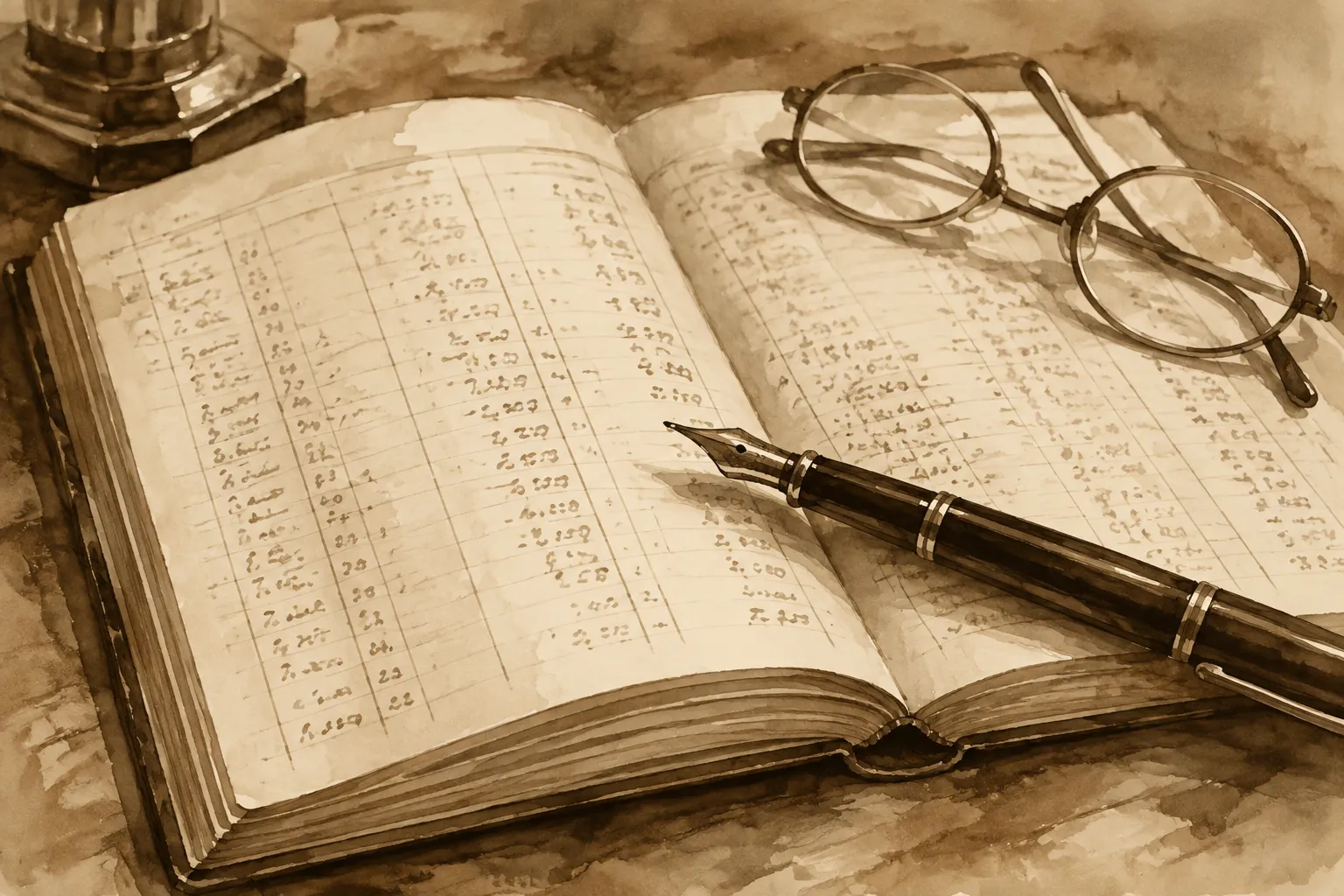
The first ledger opens with a rule the partners wrote on its flyleaf, and every managing principal since has initialed it: the house lends against what a family owns, not against what it expects. It has cost the house a great deal of business. It has also kept the house in business, which the partners judged the better bargain.
Most of what the house knows about money is what it declined to do. In May 1837 the banks of New York and Boston suspended payment in coin. The house paid coin to anyone who asked, and found that few did. In 1857 the partners could not explain the railroad companies' accounts to one another, so they held none of their paper, and were not among the creditors when the paper stopped. In 1906 the trust companies paid the best rates for deposits, and the house left its reserve in the vault, where it earned nothing and was still there in October 1907. In 1928 brokers paid twelve percent for call money. The house lent nothing to brokers, at any rate, and in October 1929 had nothing to call in. In 2008 the house held no mortgage paper it could not read to the bottom, and declined the public capital offered that October, having no use for it.
None of this was foresight. The minutes make plain that nobody in the building saw a panic coming. They saw only what they did not understand, and they had a rule about that.
The one thing the house did lend into early was the machine trade. In 1846 a government contract for ten thousand rifles came to the armory on Mill Brook, and the tooling had to be paid for before the first rifle was delivered. The partners understood a contract with the Ordnance Department better than they understood a railroad, and they lent against it. The machines that came out of that shop made Windsor the place precision was manufactured for the better part of a century, and the house kept the accounts of the shops that made them, and of the families who ran them, some of whom still bank here.
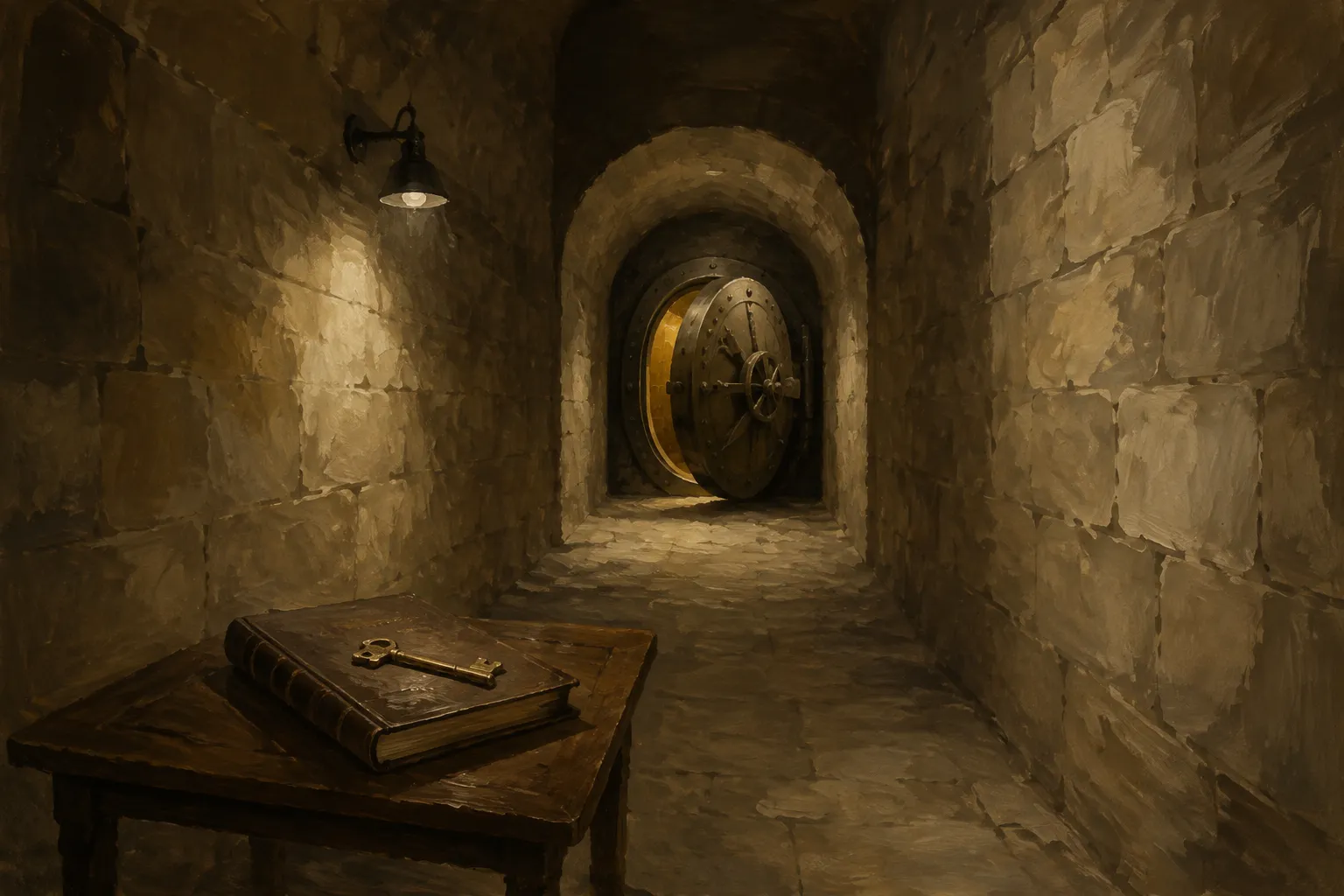
Vault 1 was sunk into the ledge beneath the house on Hewett Road in 1871, the winter after the fire in the mill yard, when the partners left Main Street for good. It is eleven feet by fourteen, lined with slate from Fair Haven, and it has never been enlarged. The vault door has one key. The ledger press inside it has another, and the second key is the one that matters. It is brass, it is carried by the managing principal, and it has passed between eleven pairs of hands. The general ledger has slept in that press every night since 1871. Today the ledger also runs on each family's telephone, reconciled against the house's copy every evening, and the key that signs each statement's fingerprint is called the ledger key for the same reason. Different metal, same job.
The Desk dates from 1934. The bank holiday of March 1933 closed every bank in the country for a week, and the house reopened on the first morning permitted. The partners found on their return that clients had been telephoning the empty building through the night. The minute of the next meeting resolves that a banker, not a clerk, will answer the house's telephone at every hour, and that the rotation will not have a gap. It has not had one since. Eight bankers now share it. They have read your file before they pick up.
In 1962 a Boston agency proposed a campaign. The minute reads, in full: Declined. The families know where we are. The house has not advertised since its charter, and it does not expect to. Families arrive by introduction, from another family or from counsel the house has worked with before. It is also why the Desk knows every voice on the line.
Two hundred and eight years is not, on its own, an argument. Old banks fail; several of the house's contemporaries from 1818 did. The argument is the flyleaf, still initialed, and the ledger, still reconciled, and the telephone, still answered. The rest is furniture.